la travesíajourney / crossing
La travesía continuó desde Venezuela hasta Brasil.
Vocabulary and context in English before you open the original.
Culture · Latin America
Venezuela and the Amazon on two wheels: a motorcycle journey
Before you open the article
This preparation gives you the story context, essential vocabulary, useful expressions and reading questions. Study it first, then open the original news article, which is written in Spanish.
Start preparing with vocabulary ↓What this article is about
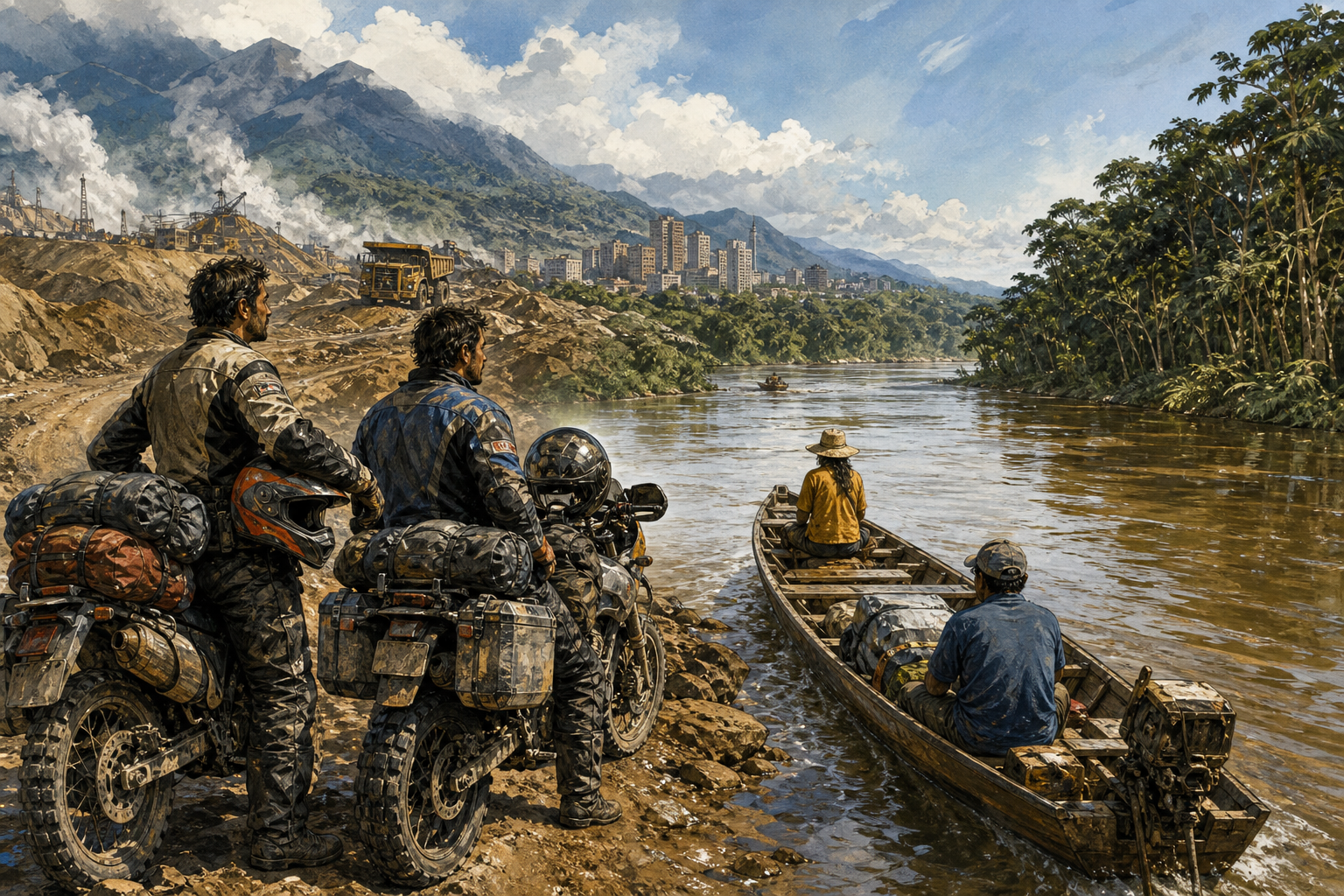
This travel chronicle follows two Ecuadorian motorcyclists through Venezuela and into Brazil, describing hospitality, difficult roads, mining zones and life along the Amazon. The second half becomes a more personal account of separation, travel by river and the sense of scale and vulnerability produced by the Amazon landscape.
Background you need
Travel chronicles combine factual description with personal impressions, memory and subjective judgments. This piece moves through several countries and regions, including Mérida, Maracaibo, Caracas, the Venezuelan interior, Boa Vista and Manaus, before continuing by river toward Peru. For language learners, it is useful for noticing route vocabulary, past narration and vivid descriptive language.
Key vocabulary
La travesía continuó desde Venezuela hasta Brasil.
La carretera estaba tranquila, pero tenía muchos huecos.
Los viajeros cruzaron la frontera hacia Brasil.
Los motociclistas pasaron varios días en una hostería.
El camino hacia Manaos atravesaba la selva.
Las motos viajaron en una balsa por el Amazonas.
El recorrido atravesó Venezuela, Brasil y la Amazonía.
Los motociclistas continuaron el viaje hacia el sur.
La hospitalidad local les permitió encontrar alojamiento.
El autor describe la inmensidad del Amazonas.
Useful expressions
Después de descansar, los viajeros siguieron el camino hacia Brasil.
En Caracas decidieron pasar de largo.
El viajero se quedó impresionado por la inmensidad del Amazonas.
Language focus
The preterite moves the journey forward through completed events, while the imperfect describes background, habits and ongoing conditions.
Llegamos a Mérida cuando ya era de noche y la carretera estaba tranquila.
Travel writing relies on sequencing markers to guide the reader through changing locations.
De ahí bajamos hacia el sur y luego cruzamos la frontera.
Chronicles often use repetition and intensifiers to convey personal experience and scale.
Manaos es una ciudad grandísima, enorme.
Before you read
Continue with the original
You have prepared the main context and language. The button opens the publisher’s original Spanish-language article in a new tab.
Open the original article in Spanish →After reading
Related topics
More preparations
Turismo sexual en Medellín: los riesgos de explotación detrás del fenómeno
“Los puertos no preguntan. Reciben.”: Patrizia Gallo debuta con su primer libro de cuentos
Por qué Arévalo no debería defender a Gerardo Aguirre
Back to this week’s edition →