pobladoresresidents / local inhabitants
Los pobladores pidieron mayor protección para su comunidad.
Vocabulary and context in English before you open the original.
Culture ·
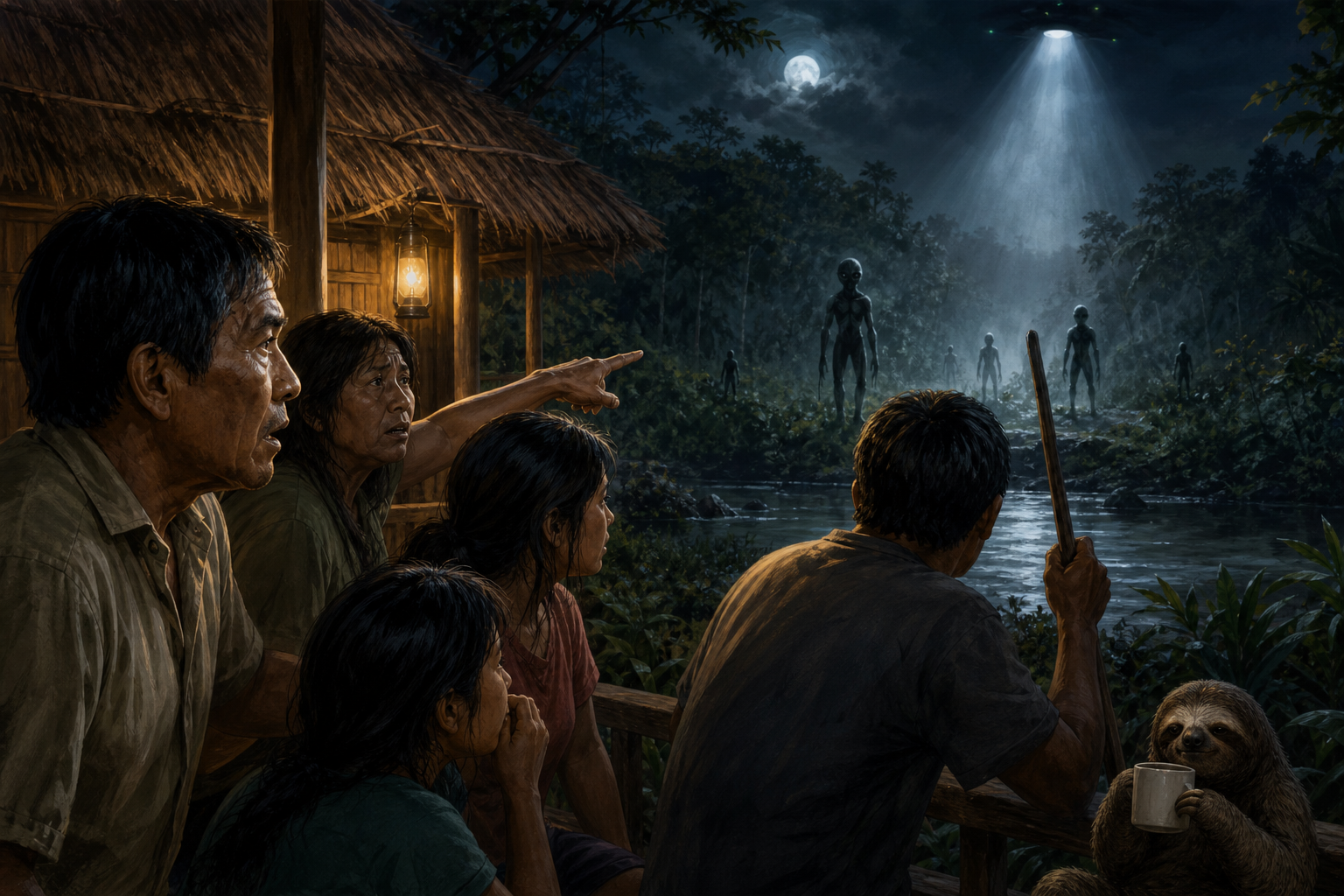
They’re extraterrestrials: Loreto residents report strange beings that attack at night
Before you open the article
This preparation gives you the story context, essential vocabulary, useful expressions and reading questions. Study it first, then open the original news article, which is written in Spanish.
Start preparing with vocabulary ↓What this article is about
Members of the Ikitu community in Alto Nanay, Loreto, reported frightening nocturnal encounters with unidentified figures and asked authorities for protection. The article presents the residents’ claims while also recording alternative local explanations and the lack of corresponding medical records at the regional health authority.
Background you need
The story is useful for learning how Spanish-language reporting handles testimony, uncertainty and extraordinary claims. RPP reports what community members said, but it does not establish that extraterrestrials were present; it also mentions explanations involving the local 'pelacaras' legend, drones, drug trafficking or land-trafficking groups.
Key vocabulary
Los pobladores pidieron mayor protección para su comunidad.
El pueblo indígena organizó vigilancia durante la noche.
Los vecinos dijeron haber visto seres extraños cerca del pueblo.
Los testimonios afirmaban que sus armas de caza no eran efectivas.
La comunidad organizó rondas nocturnas para vigilar la zona.
Algunas versiones locales mencionaban a los llamados pelacaras.
Otra hipótesis era que los objetos podían ser drones.
Una de las versiones relacionaba los drones con el narcotráfico.
También se mencionó a posibles traficantes de terrenos.
La autoridad sanitaria indicó que el caso no figuraba en sus registros.
Quick practice
Useful expressions
Los pobladores dijeron vivir aterrados por lo que ocurría de noche.
La comunidad pidió que las autoridades tomaran medidas.
Otra versión señalaba que podría tratarse de drones.
Language focus
News Spanish often uses “según” to attribute a claim without presenting it as independently proven.
Según los pobladores, los encuentros comenzaron en julio.
Conditional forms help journalists mark information as alleged or uncertain.
Los objetos podrían ser drones y las figuras serían de gran tamaño.
Verbs such as “denunciar”, “indicar” and “relatar” show who is responsible for a claim.
El líder de la comunidad relató lo que, según él, había ocurrido.
Before you read
Continue with the original
You have prepared the main context and language. The button opens the publisher’s original Spanish-language article in a new tab.
Open the original article in Spanish →After reading
Related topics
More preparations
Turismo sexual en Medellín: los riesgos de explotación detrás del fenómeno
Rita Barberá, diez años después de su muerte: un especial televisivo revisita su figura
Ante un Sevilla con diez jugadores, el Espanyol salva un empate
Back to this week’s edition →